Check What to Look For in a Dehumidifier's Efficiency Grade
This page contains Coupang Partners affiliate links; the operator may earn a commission.
Key Takeaway
Decide how much dehumidifying you need first, then compare grade and efficiency (L/kWh) within the same capacity range. Efficiency is water removed per unit of energy, not the same as the manufacturer's capacity in L.
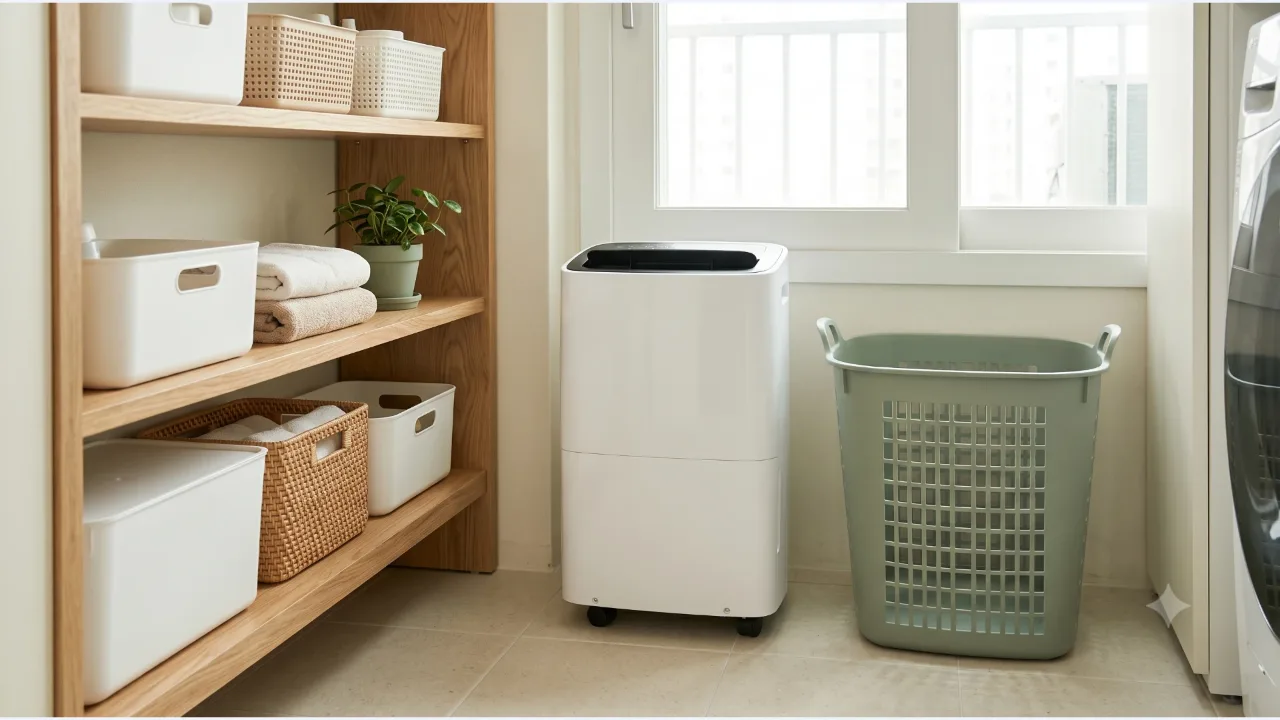
How do dehumidifying capacity and dehumidifying efficiency differ?
The dehumidifying capacity in L in the manufacturer's specs is the item you look at when choosing the capacity you need. Dehumidifying efficiency in L/kWh is the amount of water removed per 1kWh of energy, so a larger value means more water removed with the same amount of energy. The units differ, so don't rank 20L and 3.4L/kWh by size against each other.
The Korea Energy Agency's dehumidifier product search shows dehumidifying efficiency (L/kWh), energy consumption per hour (Wh), and efficiency grade. The manufacturer's power consumption in W is yet another spec item. Compare items and units that match, and for candidates with different dehumidifying amounts, don't judge which is enough for your home from the smaller Wh alone.
How do the two candidates' official specs differ?
| Model | Manufacturer dehumidifying capacity | Manufacturer power consumption | Manufacturer efficiency grade | Size W×H×D (mm) | Weight |
|---|---|---|---|---|---|
| DQ202PBBC | 20L | 333W | Grade 1 | 415×715×296 | 16.7kg |
| DQ132PWXC | 13L | 172W | Grade 1 | 382×715×296 | 16.5kg |
These are the official LG Electronics specs and the agency list values checked on October 8, 2026. Check the selling price separately on the sales page behind the purchase link. The two candidates have the same height and depth, and only the width differs, by 33mm. The weight difference with the lower-capacity candidate is only 0.2kg, so it's hard to see the one with less dehumidifying as a noticeably lighter product.
How does the agency's registered data show the two candidates?
In the agency list on October 8, 2026, the DQ202PBBC has a dehumidifying efficiency of 2.81L/kWh, energy consumption per hour of 299Wh, and an efficiency grade of 1. The DQ132PWXC has 3.4L/kWh, 167Wh, and grade 1 respectively. The smaller-capacity candidate has a larger dehumidifying efficiency value, but that doesn't mean the dehumidifying capacity is the same. Needing a large capacity and comparing efficiency per unit of energy are two separate things to think about.
The manufacturer's W are 333 and 172, while the agency's Wh per hour are 299 and 167, which differ. They are different items from different sources, so I did not merge them into one value. This material alone can't tell you the cause of the difference or the actual operating state at home. The agency notes that the display can differ depending on the manufacturing date and on changes to standards and measurement methods, so check the label on the product on sale too.
Can you calculate the actual dehumidifying amount at home from L/kWh?
No. You can only build an arithmetic example showing how the units connect. The DQ202PBBC's 299Wh is 0.299kWh, and multiplying that by 2.81L/kWh gives about 0.84L. For the DQ132PWXC, 0.167kWh times 3.4L/kWh gives about 0.57L. This is a calculation showing the relationship between registered values, not the amount of water actually collected in an hour at home.
That's because the table has no real operating conditions such as room humidity or settings. Also don't read the manufacturer's dehumidifying capacity and this arithmetic example as values under the same conditions. The numbers in the table are specs and registered values, and the results when you use it at home are something to check separately.
Which one is left once the tank and the space also fit?
If you need the 20L capacity range, compare the DQ202PBBC first, and if you need the 13L range, the DQ132PWXC. Both are grade 1, so without the dehumidifying amount you need, you can't pick a candidate from the grade alone. If body width matters, compare 415mm against 382mm, but check the spare space around it needed for intake and exhaust separately in the manufacturer's installation guide.
The official specs for the DQ202PBBC list the tank as 5L total and 4.2L when full. If you read the 20L dehumidifying capacity as the tank size, you miss how often you'll empty the water. Check the manual for each model for continuous drainage and tank care conditions.
The order to check at the end is the dehumidifying amount you need, the installation spot and width, the drainage method, and the label on the product on sale. It's not too late to compare the efficiency numbers once these conditions are settled.
Product information
Candidates compared
-
LG Whisen Dehumidifier DQ202PBBC
-
LG Whisen Dehumidifier DQ134MWEC
Check price and stock at the link. Product information is as of the date checked.
Frequently Asked Questions
Is the 20L the water tank capacity?
No. The 20L for the DQ202PBBC is the manufacturer's dehumidifying capacity, and the tank is listed separately as 5L total and 4.2L when full.
What does a larger dehumidifying efficiency in L/kWh mean?
It means more water is removed per unit of energy. Read it separately from the dehumidifying amount in your own home or the dehumidifying capacity.
If both candidates are grade 1, which one do I pick?
Decide how much dehumidifying you need first. The official capacities are 20L and 13L, and you also have to match body width, drainage, and installation conditions.
Sources & Verification Date
- Korea Energy Agency Energy Efficiency Management System Product Search · Verified
- LG Whisen Dehumidifier DQ202PBBC Official Manufacturer Specifications · Verified
- LG Whisen Dehumidifier DQ132PWXC Official Manufacturer Specifications · Verified
All materials have been verified from official announcements and may have changed since verification.